Sunday, October 30, 2016

Barbie's Beautiful Blueberrys

Once upon a time, people probably didn't have an image of a perfect woman (although this might have before Jesus was born). Today however, almost everyone has an image of the most beautiful woman in the world. This is perfectly portrayed by the very popular doll called Barbie; the doll was designed by a man, which is the main reason behind the controversy over the how it looks, and how it should look. At first, the Barbie portrayed the perfect woman that every guy wanted to be with in their life: big chest, long legs, very slim figure. Emily Prager in "Our Barbies, Ourselves," explains how the look that the Barbie doll depicts is actually like "someone who got her start at the Playboy Mansion." Using rhetoric, Prager is able to address the ugly truth, and expose the pink elephants of how horribly designed the Barbie doll is. Thankfully now after long controversy and argument against the doll, Barbies come in all shapes and colors. By doing this, the makers show that every single girl is beautiful in their own way. They don't need a society that has an image of a perfect girl, whom they want girls to be.
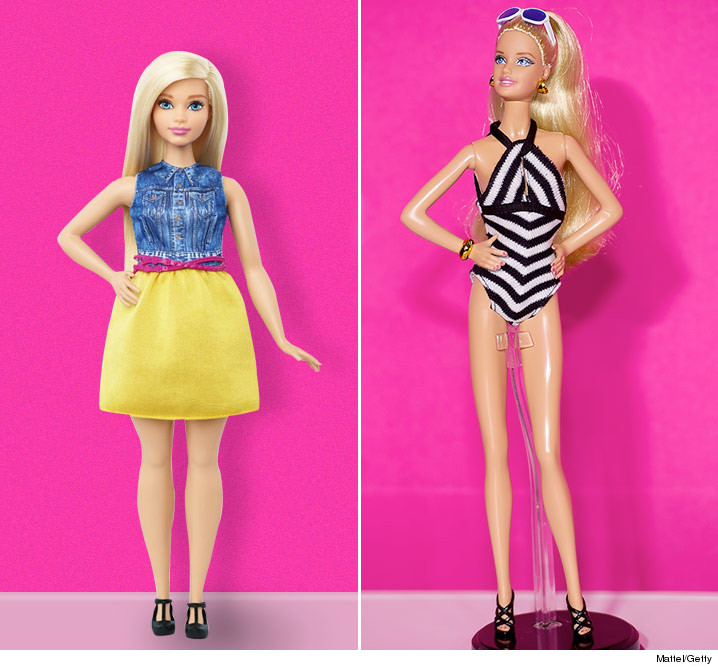
New Barbie VS. Old Barbie

As seen from the picture above, the old Barbie had long legs, big chest, bright blue eyes, and a flashy dress. Now this latest Barbie doll is every much as good looking as the old one, but is just not forced into that perfect image that society usually has. New Barbie dolls even have different skin tones and sizes, for racial and physical diversity.

Sunday, October 23, 2016

Racial Raspberries

This week we discussed about race and how it could be socially constructed. Throughout the discussion, I was always thinking what the difference between race and ethnicity is. Like where do you draw the line specifically? Then I came to the realization that the reason there is this confusion is because race is socially constructed, just like ethnicity kind of has too. Ethnicity is belonging to a certain group that shares similar beliefs and traditions. Race on the other hand is defined as a category of humankind that shares certain distinctive physical traits. Now looking at the two definitions side by side shows how close they really are. This then leads to my next point, of race being socially constructed.

Humankind is the only actual race that exists in the entire universe (or at least as of now). All these other Races-Japanese, Indian, Caucasian- are all made up by society. As said by The NY Times, "Race is not biological. It is a social construct. There is no gene or cluster of genes common to all blacks or all whites." This means that these races are not biological as there is nothing that is different from all of us except our perception of each other. Just because one person does not look the same as another, doesn't mean they have to be a different race. Society just categorizes them into these different looking groups of people. Race is also subjective to the people as one might look different to someone than to another person. For example, personally I have been seen as being Mexican by many people, even when I was young. However to the Indian community, that I am part of, sees and recognizes me as Indian, This is all bases on what the other people think and see not what I tell them or what I believe. Another example is, someone could be called black in America, but if that same person were to go to Africa, then they could be seen as white. As aforementioned, race is all perception of the other person. This is contradicted by the fact that ethnicity on the other hand, is what the person believes themselves to be.

Sunday, October 16, 2016

Mango Maus

This week in AP English, we read and analyzed the book Maus by Art Spiegelman. This was the first time in a while that I actually read a graphic novel. I have read small comics before but nothing like this, and I sure missed out on a lot. Without all the pictures this book would still be good, but not amazing like it is now. Each page, each frame, each speech bubble, was thought out very carefully and they all a deeper meaning that is just waiting to be brought out. As we analyzed this book, there were a couple of specific things that stood out to me when we talked about them. First being the level of English language that is spoken by Vladek.  Second being the relation of the format of the boxes to the actual war.

Talking about the way that Vladek speaks, kind of reminded me of my grandfather. The reason that Vladek can't talk in normal English, even though he has lived in America for a long time, is because he can't get over his traumatic experiences from the war and him constantly reliving his memories doesn't allow Vladek to move on. He is stuck in the past forever. Not to the extent that Vladek had it, my grandfather is similar, in that even though he has lived in America for a long time and has been speaking English for a majority of his life, he still can't speak it to the extent of some kids who are still learning English.

The second thing that we talked about was the borders of the boxes in the novel. Sometimes the boxes were broken and other times they were straight and strong. The broken format represented the nonexistent boundaries that the Nazis were trying to take over. How they wanted more land and they broke into others land. The closed boxed represented the oppression and the confinement that the Jews had to go through in the war.

The last analysis that stood out to, but was not talked about in class was the page to the right of this text. In this page Vladek is getting angry that Art's wife is giving a black man a ride to his home. This is ironic because Vladek is treating the black man the same way the Nazis treated the Jews. In addition, when Francoise told Vladek about his "outrageous[ness]," Vladek responded with that the black men are WORSE than the Nazis. Art even depicts this by drawing the black man as a dog. This shows how dogs are the worst as the cats and the mice are both afraid of the dogs. Then the cats are next as only mice are afraid of cats. And finally mice are at the bottom of the "food chain." This representation really stood out to me and showed me that some people will never learn better and will never think that others might feel the same way as themselves.

Sunday, October 9, 2016

The Water Chestnut Woman

"The Women Warrior" by Maxine Hong Kingston, tells a story both fictional and real life. Starting off, Kingston tells a story, originally of Fa Mu Lan, of placing herself in a made up adventure. I this story, Kingston starts off as a woman who goes on an adventure to some mountains and meets these people. There she trains and learns to fight and interact with animals of the forest. While training, Kingston sees her husband and brother being taken away by a Chinese baron, and she decides that once she finishes training, she will go back to her hometown and get her family back. With the help of an army, Kingston is able to kill the baron and take down the communists that ruled China. However, the only way Kingston was able to lead the army and was respected and listened to by her soldiers, was by disguising herself as a man. Later, the story switches to real life where Kingston is actually in America. There, she got straight A's and had a good life, except for the fact that no one in her family or around her loved her. Even her own parents would say things like "there's no profit in raising girls. Better to raise geese than girls." In addition, when Kingston stood up to her racist boss, she was fired and kicked out. Through these experiences, Kingston learns that she will never get anywhere when trying to fight everything. The only way to get things done was to use words and influence others. This can be also seen in the fictional story, where Kingston was branded with the names of the people she was to avenge. She carried the revenge and hope of her family, and women in real life, on her back to fight against evil doers. Even though women now days still might not get the fair rights that they deserve, they still fight through their words, slowly changing the world around them. 

Sunday, October 2, 2016

Disobedient Dragonfruits

Civil disobedience has been a commonly used method of protesting and fighting against other people and laws. The amount of power that comes from arguing and going against law and people, while at the same time doing it in a peaceful way, is tremendous. Some examples of great leaders that used this method are: Nelson Mandela, Rosa Parks, Dr. Martin Luther King Jr, and the one who started the civil disobedience movement Mahatma Gandhi.


This week in AP English, we read and discussed "On the Duty of Civil Disobedience" by Henry David Thoreau. In his essay, Thoreau discusses about how people need to rise up and start using their conscience to dictate how America should be. When Thoreau says "I think that we should be men first, and subjects afterward" (Thoreau) he means that the people need to stop doing what others/the majority tells them to do, and they need to start doing what they think is right.

So when all these movements/protests, like Black lives matter or the protest for higher pay for teachers, are being hated on, I would like them to read and understand Thoreau's essay. This will allow those individuals, who are against the people that are speaking their minds and standing up for what they believe in, to understand that they are the ones who are wrong. They are the ones who are not only just following the majority blindly and not thinking for themselves, but also not allowing others to stand up for what they believe in and what they think is right. Those people need listen to Thoreau and stop being subjects and start being men.